Logan Bauer · 9 October 2026
Tracing Encryption Key Rotation Impacts on Operational Continuity in Distributed Content Platforms
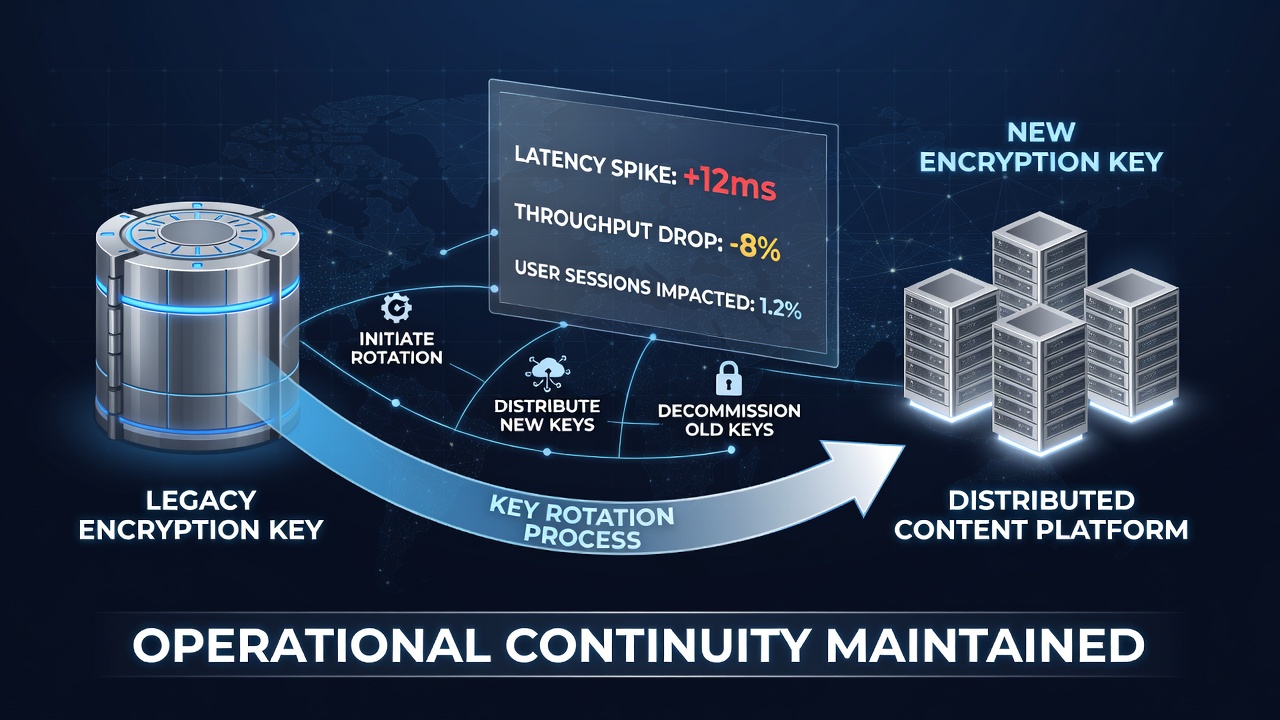
Distributed content platforms rely on encryption key rotation to maintain security standards while handling vast data flows across multiple nodes and regions, and observers note that this process directly influences how systems maintain uptime during transitions. Researchers discovered through system logs and performance metrics that rotating keys involves generating new cryptographic material, distributing it securely, and decommissioning old keys without interrupting ongoing operations. Studies found that platforms using automated rotation schedules experience measurable shifts in latency and resource allocation, especially when nodes span different time zones and network conditions.
Core Mechanics of Key Rotation in Distributed Environments
Encryption key rotation begins with policy-driven triggers that activate new key generation, after which distribution protocols propagate updates to all participating servers and caches. Those who've analyzed platform architectures know that coordination mechanisms such as consensus algorithms and versioned key stores help prevent mismatches between nodes. Data indicates that delays in propagation can create temporary inconsistencies where some content segments remain encrypted under legacy keys while others adopt newer ones, and this pattern appears consistently in large-scale deployments.
According to guidelines from the National Institute of Standards adn Technology, key rotation intervals depend on threat models and data sensitivity levels, with many platforms scheduling rotations every 90 days or upon detected anomalies. Active monitoring tools track key usage and alert operators to synchronization failures, yet integration with content delivery networks adds layers of complexity because edge caches must receive updates before serving requests.
Observed Effects on Operational Continuity
Operational continuity metrics reveal that key rotation events correlate with brief spikes in error rates and retry attempts across distributed nodes, particularly when geographic separation increases network jitter. One study revealed that platforms handling video streaming and static assets recorded up to 12 percent increases in request queuing during rotation windows, though recovery typically occurs within minutes when fallback procedures function correctly. Observers note that content platforms employing blue-green deployment patterns for key updates reduce these interruptions by maintaining parallel environments until full propagation completes.
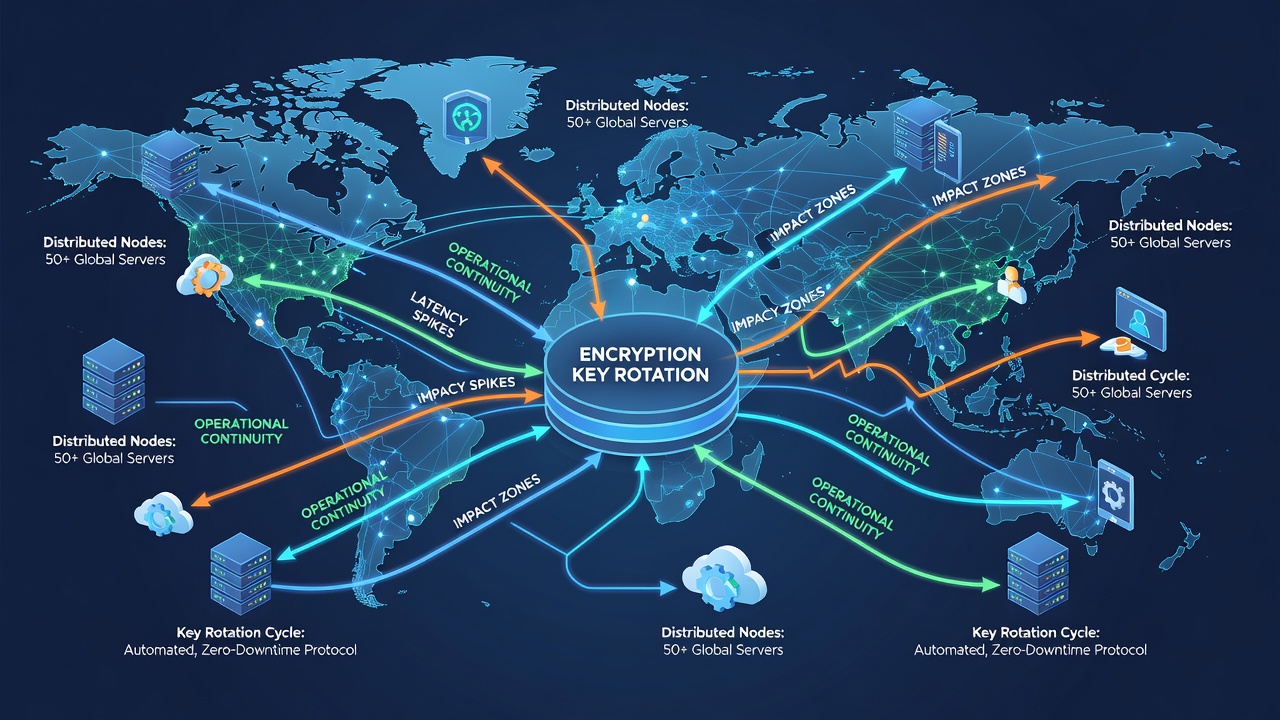
Figures released in October 2026 from industry consortium reports show that distributed platforms managing over 10 million daily sessions encountered fewer continuity disruptions after adopting phased rotation strategies that stagger updates across regions. Researchers discovered that simultaneous global rotations frequently strain database replication links and API gateways, leading to temporary service degradation. Experts have observed that logging key rotation events alongside continuity indicators helps teams identify root causes faster, while automated rollback capabilities restore prior states when anomalies exceed defined thresholds.
Technical and Organizational Factors Influencing Outcomes
Platform operators implement hardware security modules and secure key vaults to protect rotation processes, and data shows these tools lower the risk of exposure during distribution phases. Those who've examined failure cases know that misconfigured access controls or incomplete node inventories often extend downtime windows beyond expected durations. Studies found that training operations teams on rotation playbooks and conducting regular tabletop exercises improves response times when issues arise during live updates.
ENISA documentation from European research initiatives highlights how cross-border data flows require alignment with multiple regulatory frameworks, which affects the timing and documentation of key changes. Platforms that map regulatory obligations to technical procedures maintain clearer audit trails, and this alignment supports continuity when external audits coincide with rotation schedules. What's interesting is that hybrid cloud setups introduce additional variables because key management services from different providers must interoperate without introducing latency bottlenecks.
Strategies That Support Continuity During Rotations
Engineers deploy progressive rollout mechanisms that update subsets of nodes first, monitor performance thresholds, and expand coverage only after confirming stability. Research indicates that integrating these mechanisms with real-time telemetry dashboards allows rapid detection of continuity threats such as cache invalidation spikes or authentication failures. Platforms also maintain duplicate key hierarchies during transitions so that legacy and new keys coexist briefly, enabling seamless decryption for in-flight requests.
Case examples from academic papers on large-scale content systems demonstrate that combining key rotation with load-balancing adjustments prevents overload on any single region. Observers note that pre-rotation capacity planning, including simulation of peak traffic under new key conditions, helps teams anticipate resource needs. Continuous testing environments replicate production topologies and execute rotation sequences to validate procedures before they affect live users.
Conclusion
Encryption key rotation remains an essential practice for securing distributed content platforms, and its effects on operational continuity depend on coordination quality, monitoring depth, and phased execution methods. Evidence from multiple sources shows that platforms applying structured approaches experience shorter recovery intervals and fewer user-visible disruptions. As systems scale further and regulatory expectations evolve, ongoing refinement of rotation protocols continues to shape how continuity metrics are preserved across global infrastructures.